Fifteen Questions, Zero Awkward Pauses: A Host’s Guide to the Wedding Mr & Mrs Quiz
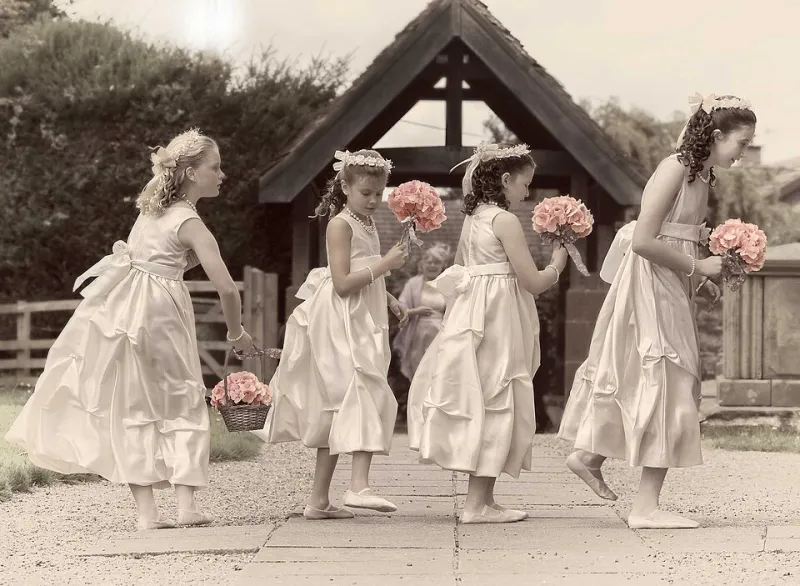
Photo: Lies Thru a Lens, CC BY 2.0, via Wikimedia Commons
The Mr & Mrs quiz has a reputation problem. Somewhere between the first dance and the last sausage roll, it can turn into a gentle interrogation: a string of questions about exes, secrets and who forgot their anniversary, with a nervous couple pinned to two chairs. Done well, though, it is one of the most reliable bits of wedding entertainment you can put in front of a room. Done badly, it is a hostage situation with cake.
The trick is to treat it like a party game, not a compatibility test. You want laughs, a bit of gentle teasing and a few moments where guests nod because the answer is so obviously them. You do not need to dig for drama. Below is a practical plan for a 15-question quiz that keeps the room warm, the couple comfortable and the awkward silence out of it.
Why the old format still works
The Mr & Mrs quiz is cheap, low-tech and built for a mixed room. It gives grandparents, university friends and plus-ones something to do together. It also gives the couple a little spotlight that is not a speech. The format is simple: one partner answers questions about the other, then the other partner reveals their answer. If you have a host who can read a room, that is enough.
Choose rounds, not random questions
Fifteen questions is the sweet spot. It is long enough to build a rhythm, short enough that nobody starts checking the bar queue. Split them into three rounds of five:
- How we met and early days
- Home life and tiny habits
- Future plans and silly predictions
That structure stops the quiz becoming a random list. It also lets you start easy and get a little more playful. If you want a tie-breaker, keep one extra question in your pocket.
The 15 questions
Use Partner A and Partner B, or the couple's names, and swap them around. Avoid anything that needs a backstory.
- What was the first thing you noticed about your partner?
- Who suggested the second date, and where was it?
- What is your partner's go-to takeaway order?
- Which one of you is more likely to cry at a dog rescue advert?
- What phrase do you say most often as a couple?
- Who is the designated spider remover?
- What is your partner's most irrational fear?
- Which household chore will your partner avoid at all costs?
- What did your partner say they would never do as a couple, then happily did?
- Where would your partner choose for a last-minute weekend away?
- What does your partner's ideal Sunday look like?
- Who takes longer to get ready?
- What song gets your partner on the dance floor?
- What is your partner weirdly competitive about?
- What is one thing you are both looking forward to in the next year?
These are not deep. That is the point. They are specific enough to produce funny answers and broad enough that nobody has to confess anything.
Keep sensitive topics off the cards
A wedding quiz is not the place for money, exes, fertility, family arguments, body image or anyone's job status. Avoid questions that could land as a dig, especially if one partner is more private than the other. If a question could be answered with a nervous laugh and a glance at a parent, cut it.
Also avoid questions where the couple have genuinely different memories of an important event. You want playful disagreement, not a live debate about who said I love you first.
Cast the right host
The host matters more than the questions. Pick someone who can keep things moving, read the room and take a joke without turning it into a roast. A friend or sibling works well if they are comfortable with a microphone. If they are not, a professional host or DJ can run it cleanly.
Give the host the questions in advance. Ask them to keep each answer to one line, cut off rambling and move on if an answer lands badly. A good host will also protect the couple from a guest who wants to shout suggestions from the back.
Time it properly
The best slot is usually after the meal and speeches, before the band or DJ takes over. Guests are fed, relaxed and still together. Keep it to 15 or 20 minutes. If it is dragging, skip a round. Do not put it in the middle of the meal, when people are still eating, or at the very end of the night, when the room has thinned out.
Involve the guests without losing control
Give each table a scorecard or a simple prediction sheet before the quiz starts. Guests can guess how many answers the couple will match. The winning table gets a small prize, or just bragging rights. You can also ask the audience to vote on the funniest answer, but keep that quick.
Do not open the floor for questions. That is how you get an uncle asking about a first holiday that nobody agreed on.
Prizes should be silly, not expensive
A tiny trophy, a box of decent biscuits, a pub voucher or a bag of pick-and-mix works. The prize is not the point. The point is that the quiz feels like part of the celebration, not a competition with a cash bar.
End on a high
Finish with a question everyone can enjoy, thank the couple, and hand straight over to the music. If it has gone well, people will still be quoting the answers at brunch. If it has gone really well, nobody will remember the awkward silence because there wasn't one.